Can You Use an AI-Generated Logo Commercially? A License, Exclusivity, and Trademark Checklist
Yes, an AI-generated logo can often be used commercially—but commercial permission does not guarantee exclusivity, trademark registration, or copyright protection. Use this four-part checklist before putting a logo on packaging, ads, or a storefront.
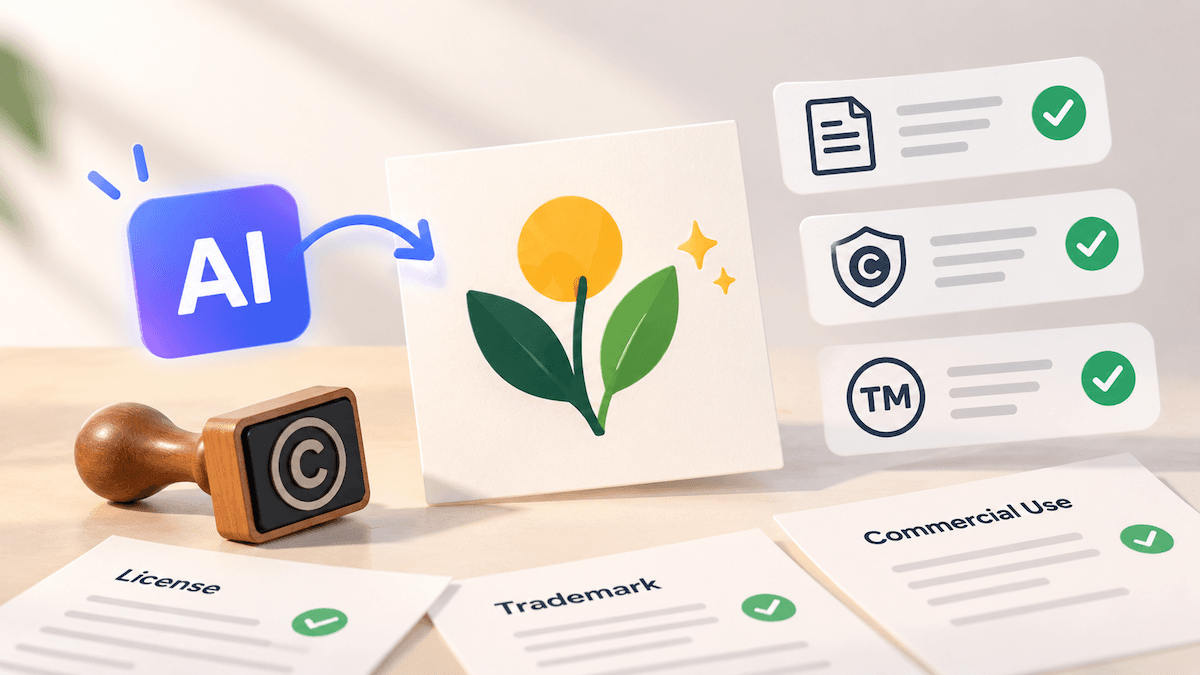
An AI-generated logo can often be used commercially, but “commercial use” is only one permission. Before you put a logo on your website, packaging, ads, or storefront, check four separate questions:
- Does the plan or tool license allow commercial use?
- Is the result exclusive, or could similar work be licensed to other users?
- Could the logo conflict with an existing trademark?
- What part of the final design, if any, is protected by copyright?
The practical answer is simple: use an AI-generated logo commercially only after you verify the license and complete a basic originality and trademark review.
Is commercial use the same as ownership?
No. A commercial-use license usually gives you permission to use an output in business activity. It does not automatically give you exclusive control over every visual idea in the output, a registered trademark, or copyright in purely AI-generated expression.
LogoAI’s current pricing information says that paid plans include commercial use of generated logos. It also states that commercial use does not guarantee exclusivity or trademark registration. Check the current terms for the plan you actually use, and save the relevant page, receipt, and date for your records.
That distinction matters when a logo will appear on products, packaging, paid advertising, or a storefront for years. Permission to use an asset is different from the ability to stop other businesses from using a similar asset.
What does exclusivity change?
Exclusivity asks whether you have a right to prevent others from using the same or a substantially similar design. Many AI tools can produce related concepts from similar prompts, and common symbols, layouts, and type treatments may appear in many outputs.
Before treating a logo as exclusive, look for clear language about:
- Whether the provider grants exclusive rights or only a non-exclusive license
- Whether the provider can reuse, display, or license generated outputs
- Whether another customer could receive a similar design
- Whether stock icons, fonts, or third-party elements have separate terms
If the terms only promise commercial use, describe the logo internally as licensed for business use rather than guaranteed unique. That wording keeps a marketing decision from becoming an unsupported legal claim.
Can an AI-generated logo be trademarked?
Potentially, yes. Trademark protection is concerned with how a mark identifies the source of goods or services in the market. The fact that AI helped create a logo does not automatically decide whether it can function as a trademark.
The harder question is whether the mark is distinctive and clear to use. The USPTO evaluates whether marks are confusingly similar in appearance, sound, meaning, or overall commercial impression, and whether the related goods or services could make customers believe they come from the same source. Use the USPTO’s federal trademark search guide as a starting point.
A basic search should cover:
- The business name and close spellings
- Likely pronunciations and abbreviations
- The complete logo
- The standalone symbol or icon
- Important design elements
- Related goods and services, including offerings outside your exact class
A clean image search is useful evidence, but it is not trademark clearance. Search results can miss state registrations, unregistered marketplace use, and conflicts in related categories.
What about copyright?
Copyright and trademark answer different questions. Trademark protects a brand identifier in the marketplace. Copyright protects original expression.
U.S. Copyright Office guidance generally separates human-authored expression from material generated without sufficient human control. Human creative choices can matter when you select, arrange, redraw, or substantially modify AI output. Rules vary by country, so do not assume that a commercial-use license creates copyright protection everywhere.
Keep records of meaningful human work, such as a hand-drawn symbol, a custom layout, original lettering, or substantial edits. Those records may also help explain how the final logo was developed if ownership is later questioned.
What should you check before launching?
1. Confirm the license
Read the terms for the account and plan that created the logo. Confirm commercial use, download rights, restrictions on client work, and any limits on resale or sublicensing. Save a copy or screenshot of the terms as they appeared when you created or purchased the asset.
2. Preserve the final version
Save the downloaded files, the date created, the prompts or inputs that influenced the result, and the edits you made afterward. Keep the version you plan to use, not only a preview image.
3. Search the name and design
Search the wording first, then search the icon and distinctive visual elements. Review live marks and real businesses in your category. Compare the overall impression at the size customers will see on a profile image, package, app icon, or storefront.
4. Decide whether the risk is acceptable
Pause before printing or filing if a close mark appears in the same or a related market. A cosmetic color change may not solve a similarity problem. Revise a defining feature, repeat the search, and ask a trademark attorney for clearance when the launch has meaningful financial or brand consequences.
For a practical walkthrough of the search stage, see LogoAI’s guide to checking a new logo for similar trademarks before launch.
A quick decision checklist
Before using an AI-generated logo commercially, confirm that:
- Your specific plan permits commercial use.
- You understand whether the license is exclusive or non-exclusive.
- You searched the name, symbol, and important design elements.
- You reviewed related goods and services, not only your exact category.
- You kept records of human edits and the final files.
- You know when the risk is high enough to ask an attorney.
Commercial permission is a starting point, not a guarantee of exclusivity or trademark registration. Treat the license, trademark clearance, and copyright position as separate checks before you build the rest of your brand around an AI-generated logo.
Ready to create your own logo?
Turn your brand name into professional logo concepts in seconds with LogoAI.
Generate my logo